


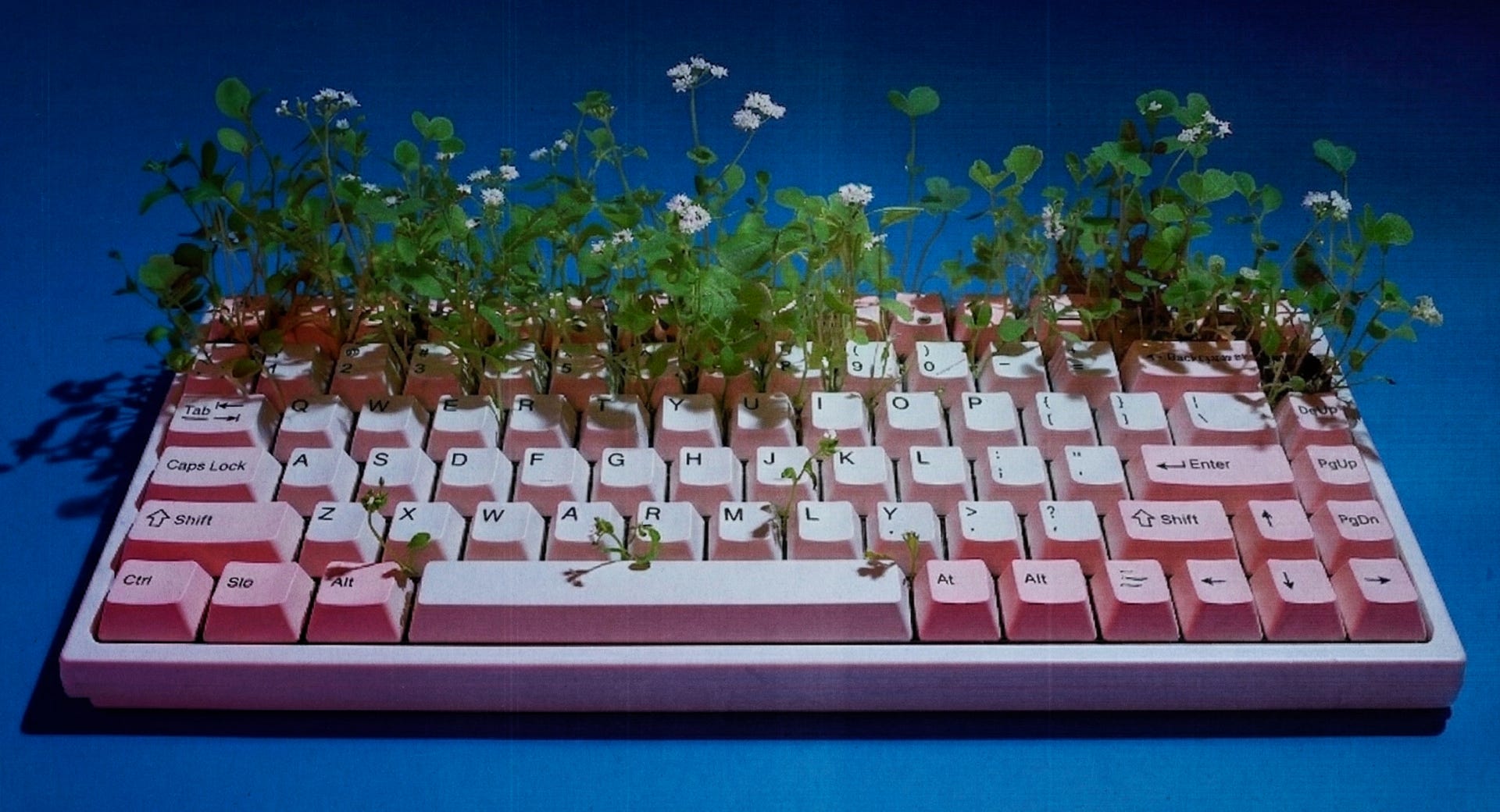
by Marc Cinanni
Warmly.
Why does every email I now receive end with “Warmly”? Did I miss the moment a love blanket was thrown over the internet? How come all of a sudden, everyone feels warm?
“Warmly” shows your hand. Not as a misstep, but as a signature of someone outsourcing their intelligence to optimize a task, time, or in this case, an email. I pay close attention to “warmly.” You might want to as well.
Because it reveals a kind of intelligence that we’re starting to trust a little too much.
The invisible ingredient
Every year, our friend Pep invites forty of us to his annual calçotada, a messy Catalan feast where we people gather outdoors to grill and eat calçots (long green onions) by hand. As Pep transferred his charred calçots from the barbecue to our plates, he started talking about the wonders of monosodium glutamate, better known as “MSG.”
“This stuff could make a rock taste good,” he said, lifting the small bottle of cocaine-like crystals to show us.
And so I ate whatever chemical cocktail was on my plate until the moment I felt the tiredness of a 3-ton walrus take over my body. Moments later, I was lying on the edges of Pep’s lawn. Eventually, I rose from my lunch coma and noticed the rest of the group had collapsed as well.
What Pep didn’t know is that MSG doesn’t actually create flavor, it enhances it. And maybe that afternoon, everything was just a little more enhanced than it needed to be. Restaurants know this, and sometimes post a “No MSG” sign on their front window. Not because it’s dangerous or rare, but because people are wary of it. In other words, an ingredient that can change a felt experience without being fully visible.
The thing about invisible ingredients is that we don’t question them. We just feel their effects and call it reality. Which made me think of artificial intelligence.
We seem to focus on the intelligence part, and skip right past the artificial, like some ingredient lost on a food label. Artificial, from the Latin artificialis, simply means made by human hands. Not born, but built. Something that would not exist without us.
In a decision I’m still not sure was the right one, I gave my aging parents access to ChatGPT. My mother immediately took a photo of her discolored thumbnail. My father started listing his physical ailments, one by one. What struck me wasn’t what the AI told them. It was how quickly they stopped feeling what may be wrong with them and started outsourcing their sensing, as if in a trance of fast questions and answers.
The AI gave them plenty of information but in that transaction, it couldn’t give them what they were actually looking for: care, concern, and being met. And perhaps that’s the best way I can say it: Artificial intelligence is very good at answering questions. It’s just not designed for being with what’s actually happening.
I found a different kind of knowing.
Leave us alone
I live almost off-grid, on three acres of forest land. I often say it’s difficult to have superfluous thoughts here when you’re dumping compost or cutting down a tree the width of a wine barrel. This is a life that demands focus, and a willingness to respond when things don’t go as planned. Because the forest doesn’t really want us here. It’s a constant negotiation in keeping the elements working with us, rather than letting them take over.
In that negotiation, you start to notice how the forest actually works. A forest can’t optimize, and it can’t predict. So instead, it responds. During a dry spell, roots dig deeper. When a tree falls, the canopy opens and something that has been waiting begins to reach for light. It’s a process of attention, adjustment, and something ends up feeling like wisdom. Basically, it reveals something that starts to look like a different kind of intelligence.
Meanwhile, we’ve spent decades building organizations that are born to predict. Systems that model, papers that forecast, and people trained to optimize. It’s like we reduce the world to what can be measured, modeled, and improved. Where the forest responds, we calculate.
And we call that intelligence?
The forest doesn’t know it’s being intelligent. It just pays attention and adjusts. It meets what’s happening, rather than trying to model it. And because it’s hard to measure, we tend to miss the whole thing.
Rewild the human
There’s a concept in ecology called “rewilding.” It doesn’t mean returning the natural world to some imagined pristine state. It means restoring the conditions for natural processes to resume. Stepping back enough that something self-organizing can take over. In plain terms: letting nature do its own thing.
So here’s my question: What if this applies to us too?
Not in the romantic sense of spears and fig leaves, but in the possibility that something in us already knows how to respond, if we stop interfering with it quite so much. I often think about this in the context of work. Not as in excluding technology, but as a question we may want to stop and think about: What did we tame in ourselves that didn’t need to be?
What capacity for sensing, for staying with uncertainty, for reading a room without immediately summarizing it, have we traded away? We’ve made efficiency the chief currency of our efforts, and it’s making us less alive to what’s actually going on. My parents weren’t looking for information. They were looking for presence. And the tragedy isn’t that they turn to AI. It’s that now, this is what’s most available.
Rewilding isn’t a strategy. It can’t be “rolled out”. It’s slower than that, and stranger. Often, it looks like boredom. Imagine a meeting where nobody opens a laptop. Or a decision that takes longer than it should because someone in the room says “Something feels off,” and everyone stops to listen.
Sometimes, it looks like a forest.
Out here, I’ve learned that the most important thing the land asks of me isn’t effort. It’s paying attention to the innate intelligence that’s already at work—inside me, within the forest, and whatever it is that connects us both.
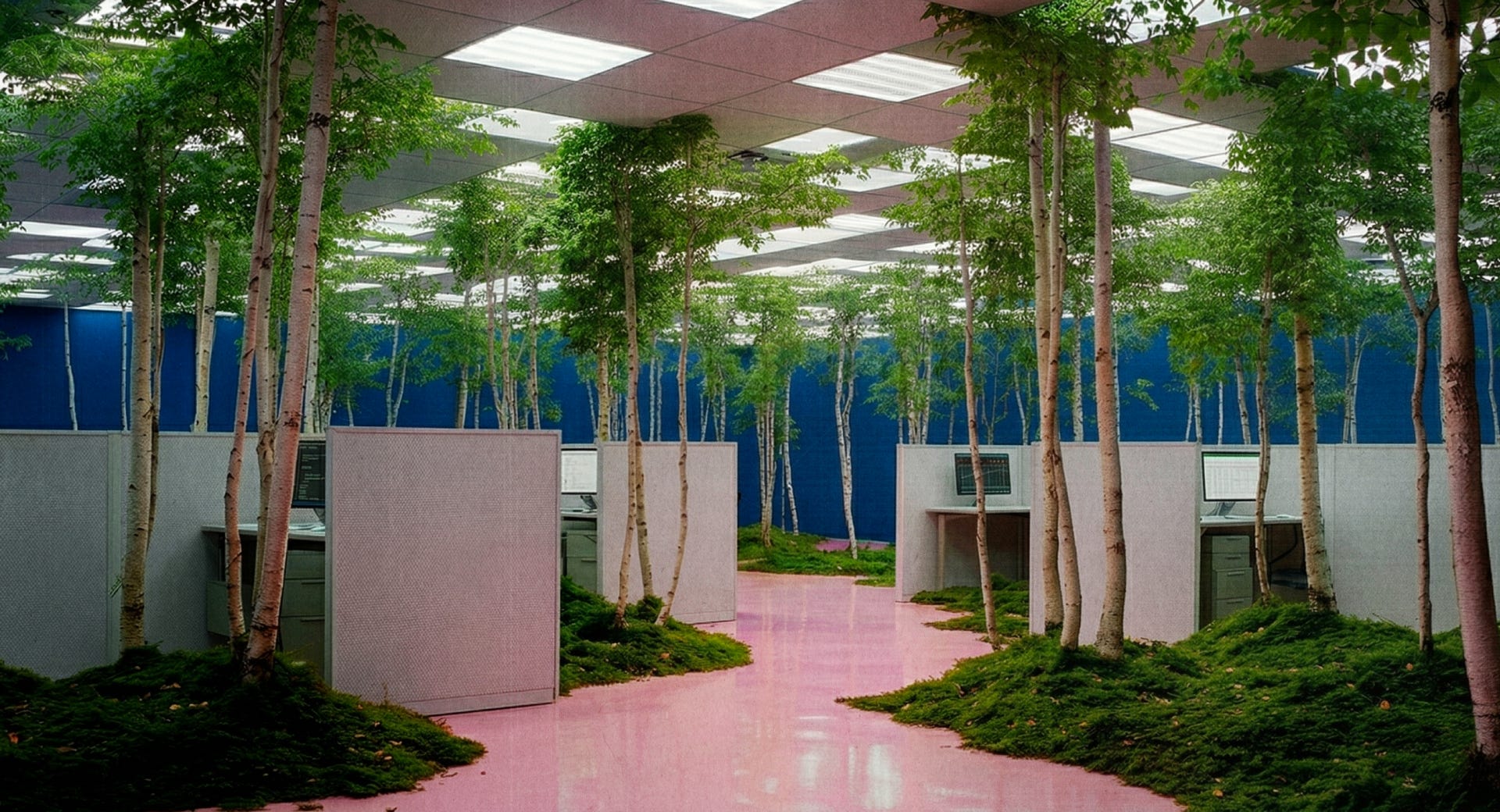
A forest in the office
I’ve seen versions of this work.
Buurtzorg, a Dutch nursing organization, runs on small, self-organizing teams with minimal management. And they consistently outperform traditional models on outcomes, satisfaction, and cost. Ricardo Semler did something similar at Semco, stripping away hierarchy and trusting employees to run the company. It wasn’t chaos, it worked. Not because they found better systems, but because they made space for human judgment to function as it should.
This is what rewilding looks like in practice. Not the removal of intelligence, but a sort of restoration of a different kind. The kind that was always there, waiting for the interference to move aside.
I’m not suggesting companies abandon their tools. I use AI, a phone I check too often, and all the rest. But I’ve spent enough time in the natural world to know the difference between a thought that was processed and a thought that arrived. The processed ones are faster, but the arrived ones are usually the right ones.
Rewilding, for organizations, isn’t a retreat or a program. It’s a structural question. What conditions are you creating for human judgment to function? Can someone say “something feels off” and be taken seriously? Are the people closest to the work trusted to sense what’s happening, or just to report on it?
Buurtzorg trusted their nurses. Semler trusted his workers. The forest trusts its own systems completely, which is probably why it’s still here after four billion years.
We built artificial intelligence to amplify what we can do. The question now, is whether we’re willing to rewild what only we can be. Warmly.
***
Marc Cinanni is the writer and editor at the House of Beautiful Business, exploring rewilding and what it means to stay human in an increasingly optimized world. He is also the co-founder of Muntanya Màgica, an almost-off-grid forest retreat space near Barcelona.

Apropos rewilding: “With everyone now a coder, you’d think this would be a good time for curators like me. Our time had come. Except that I failed,” confesses our co-founder Tim Leberecht, referring to the upcoming World Beautiful Business Forum. “I wanted to create ‘the most human gathering’—and created a monster. I no longer understand the program I created. It has become an autonomous system that exceeds my cognitive capacity to navigate. And maybe this is exactly how it should be for ‘the most human gathering in the more-than-human world.’”

The House of Beautiful Business turns ten this year. We’re marking this milestone by renewing our mission: to shape a humanist future in and through business, in partnership with AI, and for the benefit of all life on earth. Taking place in Athens, Greece, from May 7–10, 2026, the World Beautiful Business Forum is a gathering for those who dream bigger, aim higher, and long for more: four days, five acts, 750 attendees, more than 100 speakers and performers, eight amazing venues in the heart of Athens, and a wild program designed to stretch how you think, feel, and act in business—and beyond. We are offering special rates for nonprofits and students, as well as solopreneurs, founders, small businesses, and Greek residents. It will be EPIC! Only a few passes remain.
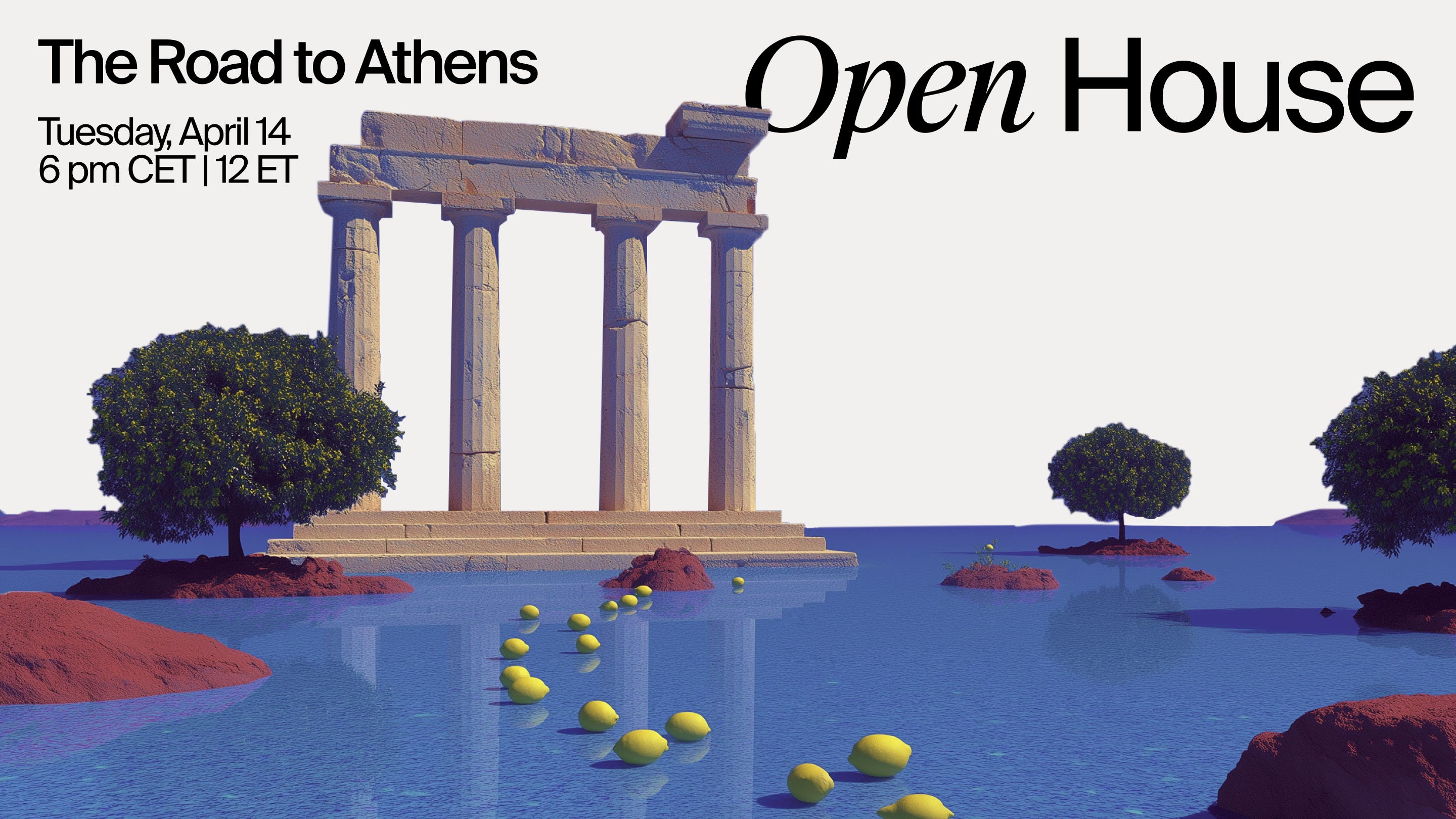
The Athens journey begins here! Participants, HoBB members, Beauty Shot readers, leaders, thinkers, and doers: everyone is invited to this special World Beautiful Business Forum curtain-raiser and onboarding session on Tuesday, April 14. We’ll open the doors to the House for you to connect with fellow attendees and community members; meet select speakers and partners; and learn more about the topics, program tracks, and experience awaiting you in Athens.
Ps. Special thanks to our partners.
Marc, this lands. Thanks :)
The "statistical rather than experiential" cut is everywhere right now. I made the same argument last week from a B2B marketing angle, after Frances drew the line in a clinical paper. Slightly different view, but the same point. Rewilding. Going to sit with that one over the weekend.... thanks again.
I’ve been using “Warmly” intentionally for years. It really bums me out to hear you say it's everywhere now. And I'm thinking back why I started using it, it was to compensate for the "medium being the message" with all these emails. With piles and piles of "Regards" or "Best" or everyone's least considered pair of khaki pants "Sincerely".