


by Tim Leberecht
“Artists are leaders,” Nina Rubesa told me the other day. Nina works in artist management and founded Patron House, a startup reimagining the Renaissance patronage model for contemporary artists.
That line stuck with me. Art not just as decoration, but as soft power, as a cultural force, as inspiration, as a way of imagining the future—sure. But artists as leaders? That implies both recognition and responsibility, elevating and pressuring artists at once.
It’s one thing to view business as the greatest art, as Andy Warhol did, or to view leadership as an art, as management scholar Gianpiero Petriglieri proposed. But it’s another leap altogether to honor—and burden—artists as leaders.
Artists as leaders don’t just open hearts, minds, and eyes. They open doors to new worlds. They ask us to follow them into their moral and spiritual imagination, their humanity. Artists as leaders is the equivalent of Dostoyevsky’s “beauty can save the world”: an antidote to ugly times, both aesthetically and ethically.
If beauty can save the world, artists must be leaders.
I’m not talking about aesthetics alone, but beauty as an artistic sensibility that appreciates the invisible, immeasurable, and intangible, and acknowledges otherworldliness as a hopeful escape route from the confines of any small world we’re building for ourselves.
Artists see more so we can all see more.
It reminded me of a conversation I had this summer with entrepreneur and philanthropist Frédéric Jousset, publisher of Beaux Arts Magazine and founder of Art Explora, a foundation that inspires new encounters between art and audiences, seeking to make the arts accessible to more people. Jousset impressed upon me the importance of understanding artists as drivers of social progress: they can see a better world, visualize, sculpt, articulate, or perform it, and then move others to build it.
Artists are working for the rest of us. Their work is a public good, a social-benefit endeavor. And yet so many of them struggle to sustain their livelihoods without public subsidies, support from philanthropists or institutions like Art Explora, or collaborations with corporate brands.
Seeking and finding beautiful business in South Korea
All these considerations came to the fore at the FuturaCanvas conference in Seoul, which I attended last week. Organized by the prolific Michelle Kim and her company DoTPlanner, the event featured a three-day program exploring the evolving notion of value through the lens of the arts: the value of human work, the value of art, and the value of an inspiring vision for the future led by artists.
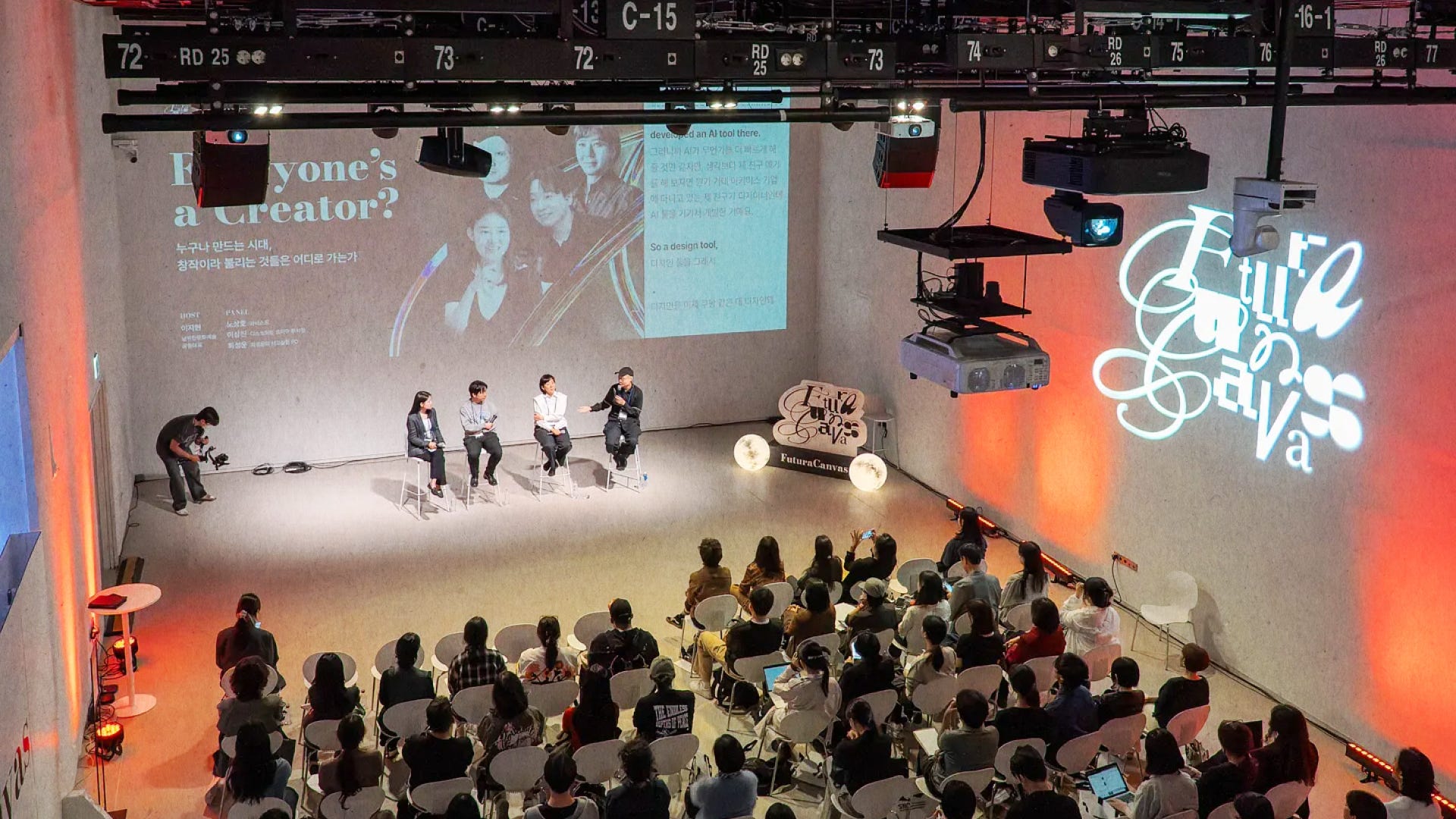
Its theme—The New Protocol—alluded not only to the technical meaning of the term in software or its social meaning in manners and etiquette, but also to a paradigm shift for the arts and the creative professions as a whole: their identity, their role in society, their complicated relationship with commerce, and, not least, their entanglement with AI—a technology that could make them both more valuable and obsolete.
In my opening keynote, I made “the case for beauty in an age of AI” and subsequently joined a panel with other creative leaders from Japan and South Korea: Yumi An King (Aww Inc.), In-taek Yeo (Peaches), and Joon-yub Lee (Gallery Shilla). I also facilitated a “Deep End Sauna” session (the organizers’ coinage), offering ad hoc mentorship to young South Korean founders through a thinking exercise that deliberately excluded digital aids such as smartphones and AI.
The first time I met my fellow speakers was during a guided tour of the National Museum of Korea, where it became immediately clear how formative evolving concepts of beauty have been throughout Korean history. Goguryeo, Baekje, and Silla, the three kingdoms that dominated the Three Kingdoms period, developed distinct artistic traditions and ideals of beauty. The relationship between outward appearance and inner character, between aesthetics and ethics, I learned, has a long history in Korean culture—a history that continues to today’s K-beauty industry and contemporary art.
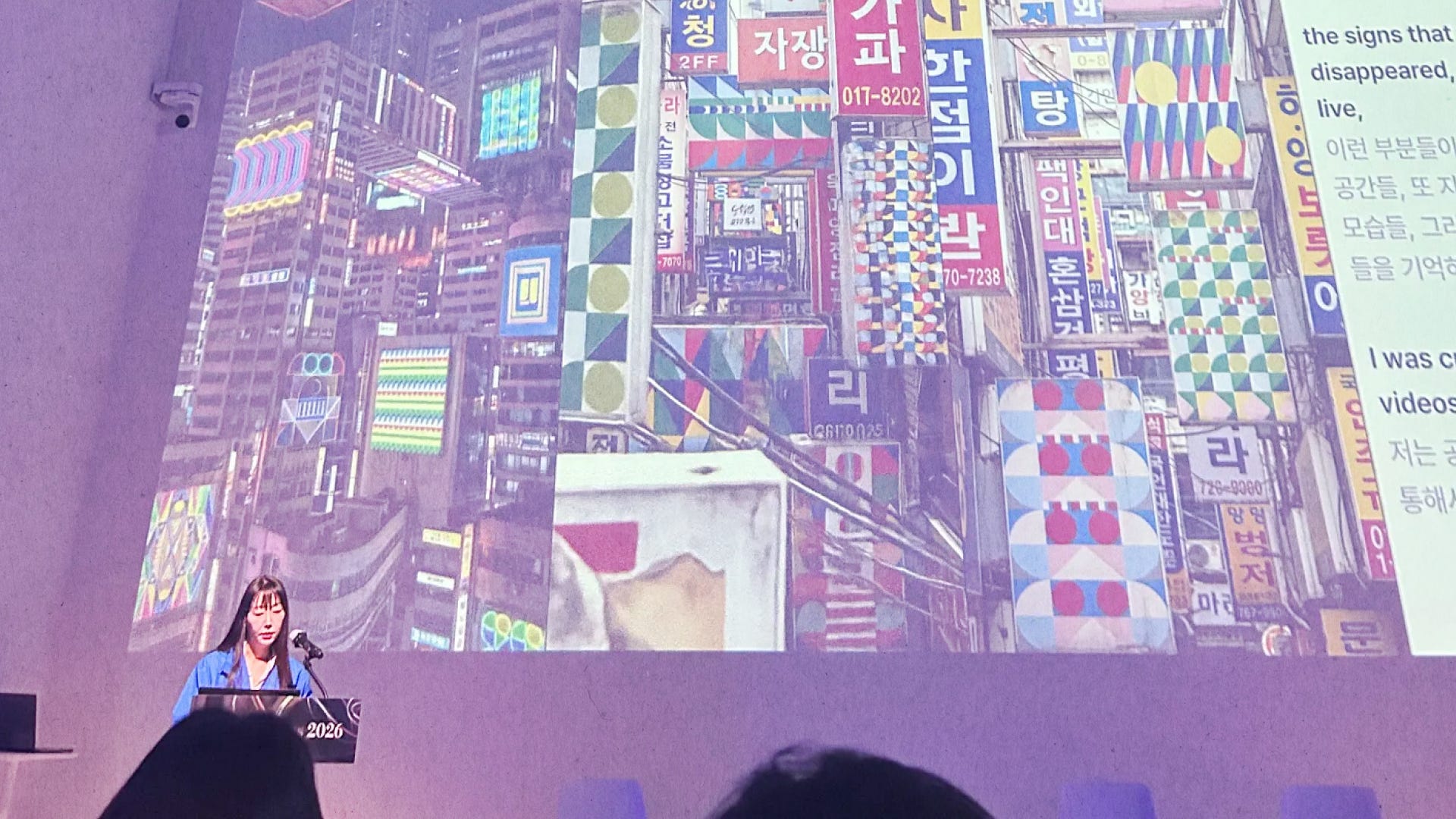
The work of South Korean artist Vakki, for example, strikes a delicate balance between eccentric colors and harmonious shapes. Featured in Apple’s store in Seoul’s Myeong-dong district, she has also collaborated with Shake Shack and other brands. Vakki’s art is an assembly of vividly colorful sensory impressions, expressing an optimistic, almost childlike joy in being alive and seeing the world through her own eyes. Her sheer excitement about digital technologies—applied to urban settings—puts those technologies, metaphorically and quite literally, in their place, making them secondary to the vibrancy of her emotions.
“I hold the belief that the world consists of patterns characterized by endless repetition and variation,” she said.
Loops with humans in the loop.
Reuben Wu, the Liverpool-born, Chicago-based British photographer, has a history with Apple as well. In 2023, he created a six-image photography series titled The Inner Landscape using the iPhone 15 Pro Max, combining his signature drone light-painting and LED lighting techniques with the phone’s camera capabilities in locations such as southern Utah. The work was featured at Apple events, presented alongside Apple CEO Tim Cook, and exhibited as large-format prints.
A former musician and member of the band Ladytron, Wu has developed a distinctive visual style that can perhaps best be described as in situ awe. He uses aerial lighting and long-exposure photography to capture the magic of Peru’s rapidly retreating Pastoruri Glacier or the ancient monument of Stonehenge.
One series of his he calls “Aeroglyphs”—geometric light patterns created by capturing drone flight paths through long exposures. “These temporary light drawings exist only in the dimension of time visible through photography, leaving no physical trace on the environment,” he writes.
“We must curate intelligence itself.”
Juhyun Cho, curator at the Centre Pompidou Hanwha in Seoul, shifted the conversation to the fast-changing art of curation. In her brilliant talk on “generative curation,” she proposed treating curatorial practice as an increasingly co-authored, algorithmic process that could reduce bias in human curation, add context, or even perform certain curatorial tasks autonomously.
This changes the very nature of museums and other cultural institutions, which, in her view, must now become meta-curators—humans in the loop who oversee the interplay of human and algorithmic curation while serving as guardians of AI ethics.
Her thesis reminded me of the work of South Korean researcher and policy expert Mika (Jaeyun) Noh. In her book Curating Intelligence: The Playbook for Art, Governance, and the New Global Economy, she argues that AI is becoming a form of cultural infrastructure: It draws on vast repositories of human cultural production and therefore requires not only technical, safety-oriented regulation but also a broader framework of cultural governance.
To “curate intelligence” is to reject the idea that intelligence is merely something manufactured by engineers. It means recognizing that intelligence—and artificial intelligence in particular—is selected, contextualized, governed, and given meaning by humans. In this sense, AI is indeed becoming a “cultural operating system,” as Noh describes it.
Cultural institutions that once curated objects, artifacts, and knowledge may increasingly find themselves curating intelligence itself—deciding what is preserved, digitized, licensed, contextualized, and made available to machines. In this sense, cultural institutions are becoming institutions of AI governance, whether they explicitly understand themselves that way or not.
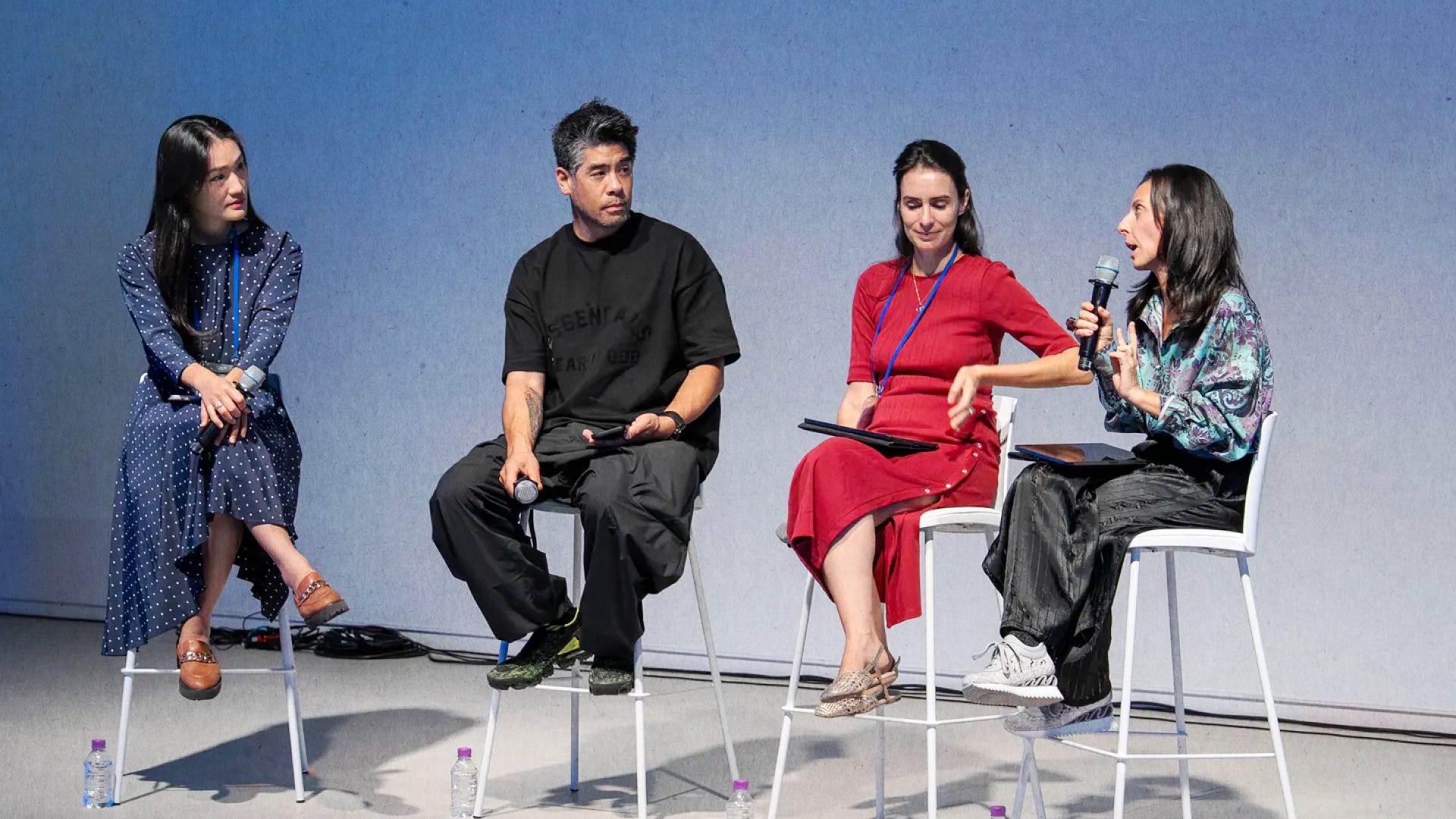
Continuing this exploration of the changing relationship between art and technology, I was also captivated by lectures and panels featuring South Korean digital arts curator Grida and her European colleagues Marlène Corbun (head curator of Danae) and Eleanora Brizi (co-founder of 100 Collectors). They took stock of the digital arts scene after the NFT crash and heralded the power and beauty of a new wave of Web3 projects fueled by AI. Evidently, crypto art is again brimming with confidence, and the creative force on display is tremendous.
Case in point: Belgian entrepreneur Antoine Grenez, who presented his installation Egregore’s Echoes, an interactive, egg-shaped participatory work in which visitors’ contributions are intended to support ecological and environmental initiatives grounded in regenerative practices. Grenez debuted the installation during Korea Blockchain Week, with its “ego to eco” mindset marrying the ecology of nature with the ecology of Web3.
(66)DAYS: Cave and garden
A related interplay between individual and community is at the heart of a project presented at FuturaCanvas by young South Korean founder Sujin Keen, (66)DAYS. Inspired by research on habit formation suggesting that it takes an average of about 66 days for a new behavior to become automatic, Keen has created an online gathering series in which participants journal both individually and collectively, documenting their personal growth over 66-day cycles.
The idea is that social journaling, supported by a community, can offer a greater chance of lasting transformation than solitary efforts. Keen also hosts occasional in-person meetups for (66)DAYS members, while the community organizes cohort-based challenges and offline exhibitions of participants’ records, such as the recent (66)DAYS Season 2 Exhibition (“Human in the Loop”) in Seoul.
Keen describes (66)DAYS as a combination of “cave” and “garden”: self-reflection paired with the sense of belonging and accountability that comes from community. Moreover, participants’ contributions are recorded anonymously, forming a lasting repository—a “living library” of idiosyncratic desires, dreams, and tastes.
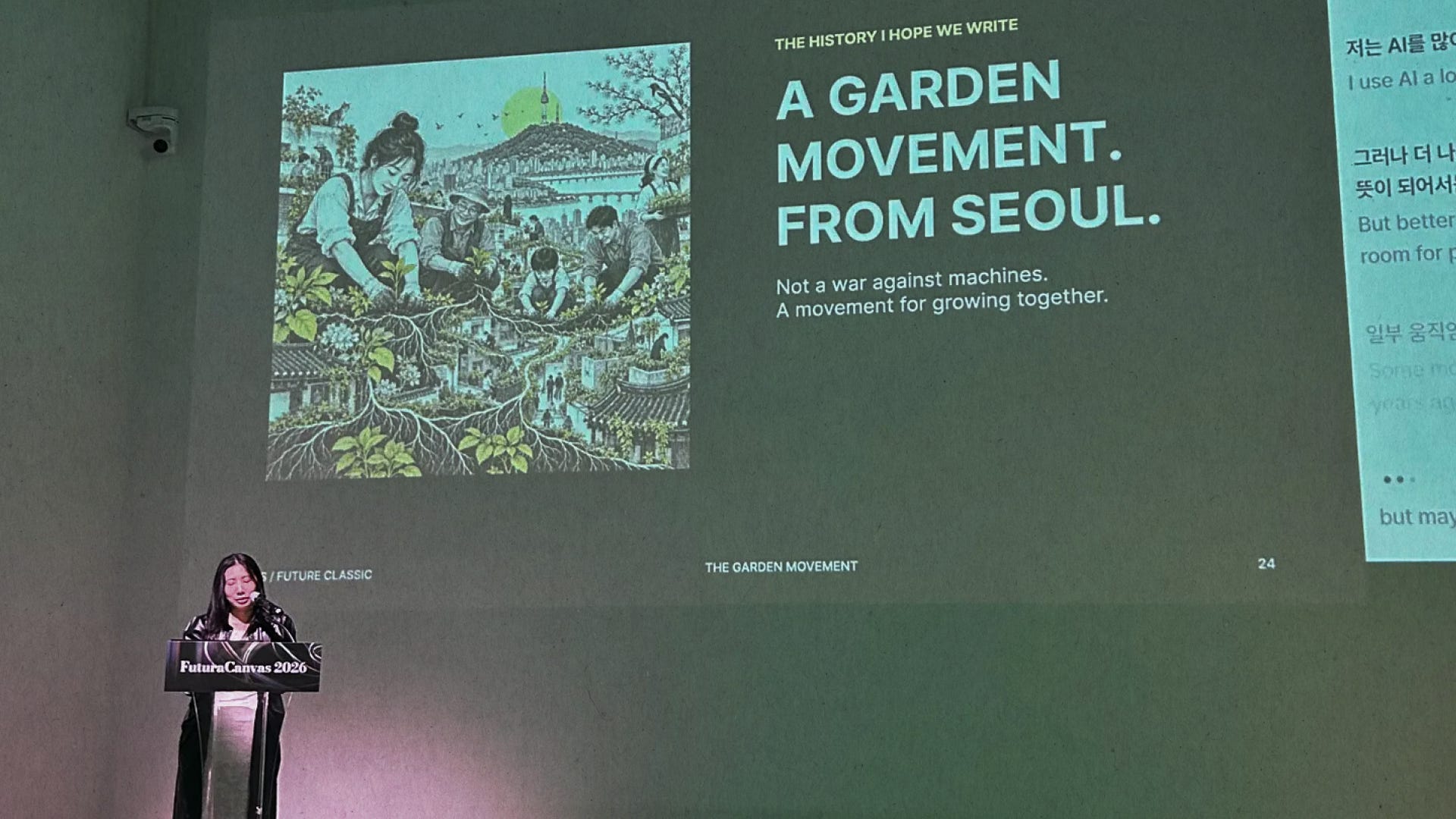
Over the course of 66 days, each community member “becomes a little more themselves,” she writes, while the collective creates a record of humanity that, like NASA’s Voyager Golden Record sent into outer space for potential extraterrestrial audiences, can be passed on to future generations.
In an age of AI and “one agent per person,” Keen believes that “what keeps us ‘ourselves’ all the way through is the record of our thoughts.” For her, (66)DAYS is a “garden movement from Seoul”: not a war against machines, but a movement for thinking and growing together to stay human.
This longing for humanness seems to resonate with a broader tension in South Korea, where the nonhuman is becoming an increasingly familiar presence in everyday life.
The automated future is already here, and in Seoul, at least, unusually distributed: The immigration terminal that greeted me in German. The Uber app reducing conversations with taxi drivers to “hello” and “thank you” (well, not that I was able to say much more in Korean). The robot delivering room service at the hotel. The ordering screens in restaurants, and the human staff merely pointing at them. The AI slop flooding social media.
(66)DAYS cuts straight through it, making a countercultural statement that, at the same time, struck me as quintessentially South Korean (based on my in-depth knowledge gained from my first-ever five days in the country…).
Angst, artists, automats
In South Korean culture, I came to understand, long-term perspectives—looking both backward and forward—and short-term action can be comfortable bedfellows. So, too, can a hypercompetitive work environment and a strong collective identity, with communal bonds shaped in part by Confucian traditions.
These forces are not always in balance, as I learned in several conversations during my week in Seoul. The pressure to keep up and perform across all strata of society can take a considerable psychological toll. South Korea’s suicide rate, at 23 deaths per 100,000 people compared with an OECD average of 11, is a sobering indication of the challenges the country faces. Meanwhile, the intense competition for desirable careers has made medicine an especially attractive path for young people seeking purposeful and stable work.
The Korean-born philosopher Byung-Chul Han, who lives in Berlin, explores the paradox of self-exploitation in The Burnout Society: “Today, everyone is an auto-exploiting laborer in his or her own enterprise. People are now master and slave in one. Even class struggle has transformed into an inner struggle against oneself,” he writes.
The volatility experienced at the individual level is also a collective experience. South Korea’s astounding success as one of the Four Asian Tigers (South Korea, Hong Kong, Taiwan, and Singapore) has unfolded against a backdrop of both remarkable economic growth and political tremors that could ripple through the region at any moment.
As a German, I can relate to that ever-present angst. The two nations share striking historical parallels: highly educated populations; postwar economic miracles; strong commitments to liberalism and democracy, regularly tested by authoritarian forces; and geopolitical positions shaped by conflicts, political fault lines, and powerful neighbors.
“It helps to have a hostile neighbor,” a manager told me over dinner. It reminds South Koreans of what they stand to lose, he said: freedom, stability, and a highly advanced, meritocratic society. These are things they will never take for granted.
That angst, though, is always palpable. And perhaps, combined with a strong sense of agency—the conviction that one can shape one’s own future—it is one of the driving forces behind the outburst of creativity known as the “K-wave”: K-pop, K-beauty, K-film, and the broader cultural phenomenon that has carried Korean pop culture around the world.
Fueled by the extraordinary talent of Korean creators, the K-wave has also benefited from government efforts to recognize and cultivate the soft power of art and creativity through cultural exports, tourism, and international visibility. South Korea has firmly established itself as an agenda-setting creative powerhouse on the global stage.
A paradox remains: On the one hand, there is the K-wave’s celebration of individual expression and image. On the other, there is a society bound together by an invisible compact, rooted in centuries of cultural continuity and driven by a shared understanding that without clear-eyed foresight, constant adaptation, and relentless learning, regression is inevitable.
That social protocol, I felt, is still strong, despite the dizzying pace of change that can overtake you at any moment in Seoul.
On my last night in the city, we had dinner at a neon-lit restaurant in the trendy Seongsu-dong district, a neighborhood of repurposed industrial spaces, design cafés, and pop-up shops. A Cybertruck was parked outside in the alley, in front of a shop called “Point of View,” which describes itself as a “curated store for the artistic mind.” Meanwhile, we were indulging in gamjatang, a traditional spicy pork-bone stew served in a bowl that appeared to have infinite depth.
There’s a lot of meat on the bone in South Korea.
“You are becoming Korean,” laughed David, a business executive who had worked with global tech firms and governments. At our group’s table, I had poured him beer and served him food before filling my own plate—a polite gesture customary in Korean culture.
It was a nice thing to hear. Sometimes humanizing comes down to the smallest things, like, in this case, being seen for seeing others.
Politeness breeds politeness. In an era of “Dark Mode,” when watching others defy protocol or behave outright rudely can tempt us to abandon implicit social norms ourselves, that is reassuring.
In fact, in a time so obsessed with the future, being fully present—with each other and with and through art—can be a breakthrough innovation.
***
P.S. During my visit to Seoul, I was interviewed by columnist Cho Yong-tak for Fortune Korea. You can read the article here.

Our flagship gathering will take place on November 3-6, 2027 in Athens, Greece, bringing together 1,000 of the world’s most imaginative leaders for four days of insights, stories, and experiences that have no home anywhere else. Plus: This time, we’re extending our Athens presence beyond the Forum. For those who want to go deeper, connect, and take action, we’re creating a special pop-up space, The HoBB, in central Athens from October 20–November 20, 2027—during and for the two weeks before and after the Forum. The HoBB will host exhibitions, collaborations, coworking, and special programming throughout the month.

The Beautiful Business School is a one-of-a-kind online learning journey that provides you with a comprehensive, decidedly humanist playbook for the age of AI. Over the course of five weeks—January 26 to March 4, 2027—you’ll embark on a deep, dynamic journey into the art and practice of beautiful business. Through live sessions, expert guidance, improv, a curated library, and interaction with AI agents and a vibrant global community of peers, you’ll develop the creative insight and human leadership needed to shape a more beautiful future.

There’s never been a better time to become a paying member of the HoBB. Annual membership includes 20% off all events and products (including The Beautiful Business School and the World Beautiful Business Forum), as well as access to session recordings, both online and in-person, and other exclusive content. Your support is vital as we aim to continue offering free online programming and grow the community.