


by Tim Leberecht
In a conversation with German philosopher Christoph Quarch yesterday, I was reminded of the power of Greek mythology.
Both of us felt demoralized by the landslide victory of the far-right AfD (“Alternative for Germany”) in the state election in Saxony-Anhalt. The party — its state branch labeled “extremist” by German authorities — secured a shocking 43.8 percent, potentially enabling it to govern and further disrupt, if not destroy, the traditional mainstream party system at the national level that served the country so well in the postwar era.
That era is long over. Germany’s economic, political, and moral decay is no longer an intellectual exercise. It is palpable everywhere you go.
And let’s be clear: Democracy as it is practiced today in Germany — and, in fact, almost anywhere — stands no chance against the “fuck the establishment” appeal and algorithmic persuasion of extremists, fueled by hybrid warfare and an emerging tech-totalitarian empire. Social media eats facts and figures for breakfast.
So what does it take to win back those voters and change what seems to be an inevitable trajectory?
There are those who argue that we need a new, more attractive vision of the future grounded in humanist values, and a new, more compelling story for liberal democracy.
I was one of them.
For the House of Beautiful Business, I curated speaker after speaker who proposed — with admirable conviction and persuasiveness — positive narratives that trusted in people’s intelligence and critical faculties, that trusted in our “shared humanity.”
I’ve realized it’s too late for that.
The one thing that makes the AfD and its ilk so attractive is their unwavering appetite for destruction. It is a transgression that is dramatic, entertaining, enthralling — and, most importantly, cathartic. No other political camp can compete with that.
These are desperate times, end-of-time times: times of profound change and disenchantment, causing immense fear and even grief among those of us whose security, certainty, and identity feel under attack. The bureaucratic solutions offered by middle-of-the-road parties are simply too complicated, too dull, too bloodless to resonate.
It’s not even a matter of content. It is a matter of delivery.
Reason and rage are locked in an unfair competition because rage makes us feel alive. It makes us feel that, for once, we are “on the right side of history” — part of a movement, part of a community to which we can belong without having our credentials or values checked for correctness or purity. A place where we can show up as we are. As our full, imperfect, ugly selves.
We must create more extreme experiences than the extremists. We can fight irrationality only with irrationality, fury only with fury.
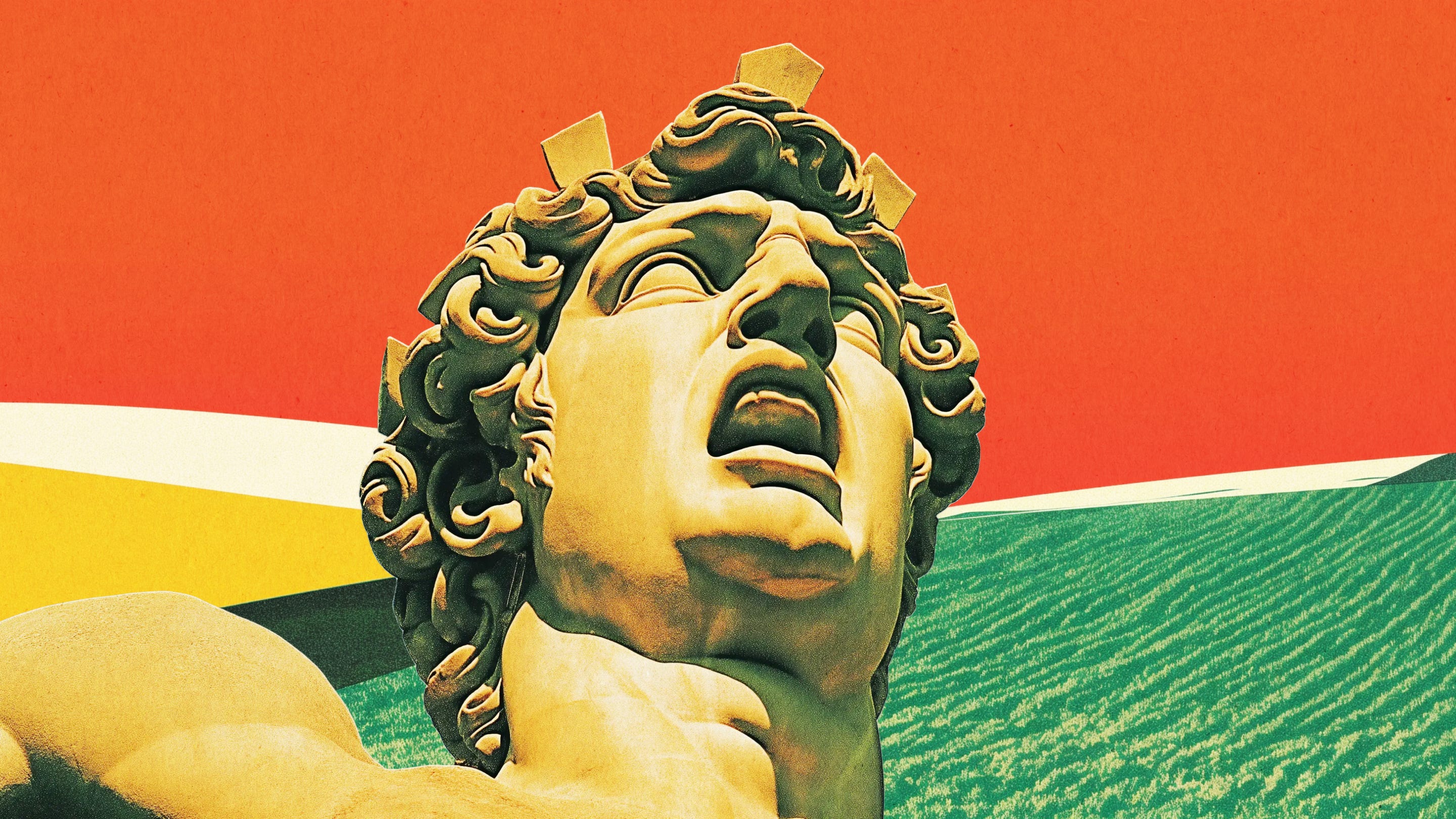
This is — Christoph reminded me — where Dionysus comes in: the god of ritual madness, ecstasy, and theater, who brings both joyous celebration and devastating, temporary insanity to those who cross him.
The legendary Dionysian festivals of ancient Greece were sites of wildness, transgression, and ecstatic abandon. Dionysus was the god of outsiders, of those who crossed boundaries and disrupted established order; a figure through whom suppressed forces could erupt into the open.
Dionysus was the god of the “beautiful catastrophe.”
In classical tragedy, performed in honor of Dionysus, the catastrophe is the ultimate turning point or resolution of the plot. It is the moment when the tragic hero’s world completely unravels through fate, action, or divine intervention.
This catastrophe is sacred. If you do not play, you are lost. If you do play, wholeheartedly, you become transformed.
This is what we need now.
We need to surrender to the madness and accept that we are at a turning point. We need to burn the house down before others do it. We must dismantle from within the system that has served us so well — but we must do so fast, with lust, not contempt, and with the intention of welcoming the new world “with all its power and might.”
Rather than clinging to what used to work, we must find beauty in the wreckage. Not fixing, not restoring, not healing. Not breaking things and moving fast. Just breaking things.
Before a new beginning, we must end beautifully.
This will allow us to cut through all the bullshit, including our own. It will lift our spirits and engage all our senses in the nonsensical, in the way a religious ritual or a rave does.
Only then can we become enraged and ecstatic enough to create a new world — with more energy, more intelligence, more life than the unimaginative destruction fantasies of the extremists that will end without any beginning.
***